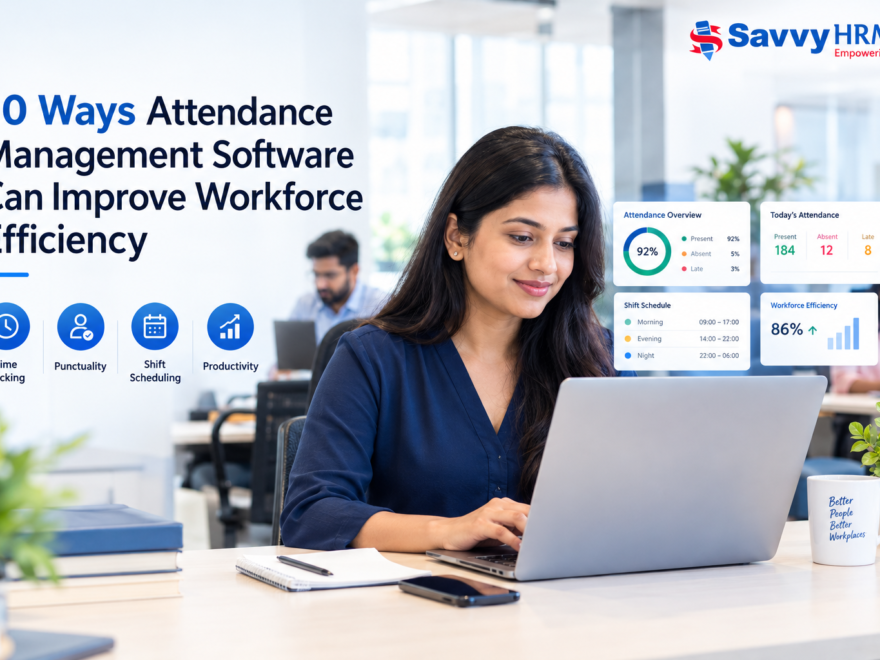
Every business needs good workforce management to reach its goals, but tracking employee attendance can be hard. HR teams must track working hours, manage leave requests, check late arrivals and keep correct attendance records. Manual tracking takes time and can lead to mistakes. With Attendance Management Software, businesses can track employee attendance and organise daily work with less effort.
Small changes in attendance tracking and work planning can help businesses save time and improve employee productivity.
Every business should learn these ten ways attendance management software can help employees work better.
1. Reduce Manual Attendance Tracking
Businesses need accurate employee attendance records, but manual tracking takes time and effort. HR teams must check attendance records, update spreadsheets and count working hours. These tasks create an obstacle that prevents them from completing their work during their normal workweek.
Businesses can use Attendance Management Software to track their employees’ attendance through digital systems that enable them to monitor employee clock-in and clock-out activities. The system enables employees to record their attendance through three different methods which include mobile app usage, web portal access and biometric device operation.
The software cuts down paperwork and frees up time for HR teams. Staff members direct their attention toward essential work because they do not need to spend their time on attendance record maintenance.
2. Improve Attendance Accuracy
Businesses can track employee work hours through precise attendance records which also enable them to produce correct payroll information. The system experiences problems because employees fail to mark their attendance and HR staff members input incorrect data during manual entry processes.
Businesses can use Attendance Management Software to track their employees’ attendance through digital systems which stop them from making errors when they enter data manually. Managers have the ability to view attendance information which helps them detect missing records and wrong time entries.
Read More: The 10 Best Photo to Video AI Generators of 2026
HR teams can create payroll information with few modifications because they possess accurate records. Employees can also check their attendance and report mistakes. The process creates an atmosphere of trust that develops between workers and their supervisors.
3. Monitor Employee Attendance in Real Time
Managers must track employee attendance status as they need to know which employees are currently working in the office and which ones have taken time off or are working from home for their daily operations. The absence of current attendance data will create problems when staff members need to get their assignments and when employees unexpectedly miss their work shifts.
Attendance Management Software allows managers to check employee attendance through a single system which functions as their central monitoring point. Managers can track attendance data through software tools that they use to identify workers who need to stay at work during their scheduled shifts.
Daily operational data allows businesses to handle their operations while they find suitable replacement staff members. Managers create work schedules through employee availability data to prevent delays which helps different teams work together more effectively.
4. Simplify Leave and Absence Management
The process of managing employee leave through email, paper forms and spreadsheet systems creates difficulties for HR departments to handle their work. They need to review leave requests, check available leave balances and update attendance records, which takes time.
Attendance Management Software allows users to connect their attendance tracking system with their leave management system. The digital platform lets employees send their leave requests but managers need to follow company rules when they decide on these requests.
The system reduces all forms of documentation which makes it easier for every user to manage their time off requests. Organizations can handle employee shortages because HR teams track staff availability to create work schedules which helps operations continue.
5. Manage Shifts and Working Hours Better
Businesses that run multiple shifts need clear employee schedules to keep work moving. Poor shift planning can cause staff shortages, overlapping schedules and confusion about working hours.
Attendance Management Software helps managers create shift schedules and track employee attendance against assigned hours. Some systems also send alerts about late arrivals, missed attendance entries and shift changes.
These tools help employees understand their schedules and allow managers to plan daily work. Better shift planning reduces confusion and helps businesses keep enough staff in each department.
6. Simplify Payroll Preparation
Employee attendance plays an important role in salary calculations because working hours, overtime and unpaid leave can change employee pay. When HR teams collect attendance details by hand, they spend extra time checking records and fixing mistakes.
Read More: Making Business Reporting Faster and Easier
Attendance Management Software helps businesses organise attendance data and share it with payroll systems when both systems support integration. This cuts down repeated data entry and helps HR teams prepare payroll details with fewer manual steps.
Connecting attendance and payroll records helps businesses process salaries with less effort. Employees also benefit from clear working-hour records, which help them understand their salary calculations.
7. Support Better Workforce Planning
Businesses need to assign employees based on workload, working hours and department needs. Poor attendance tracking makes planning harder because managers may not know which employees are available.
Attendance Management Software creates reports about employee attendance, absences, late arrivals and working hours. Managers can use these reports to spot attendance patterns and find departments that often face staff shortages.
This information helps businesses plan schedules and share work among available employees. Better planning can reduce delays, balance workloads and improve teamwork across different departments.
8. Improve Attendance Tracking with Biometric Technology
Businesses need reliable ways to track employee attendance and prevent false entries. Traditional registers can cause problems when employees forget to record their arrival or mark attendance for someone else.
A Biometric Attendance System uses fingerprints or facial recognition to check employee identity when they mark attendance. When the system connects with attendance management software, it sends attendance records to one central platform for tracking and reporting.
This helps businesses keep reliable records and reduce manual work. Companies should choose suitable devices and follow privacy rules when collecting employee information.
9. Manage Attendance Across Different Locations
Businesses with multiple branches, remote employees and field teams need an easy way to track attendance across different locations. Separate registers and spreadsheets can make employee records hard to manage.
Cloud-based HRM software helps businesses access attendance details through an online platform. Depending on its features, authorised users can check attendance records, review reports and manage employee information from different locations.
This makes attendance tracking easier for teams that work across different places. A central system also helps HR teams follow the same attendance rules and avoid collecting records from each office by hand.
10. Save Time with Automated Attendance Reports
Preparing attendance reports by hand takes time, especially when businesses manage many employees. HR teams must gather details, check records and prepare reports for managers and payroll staff.
Attendance Management Software can create reports about working hours, employee absences, overtime and late arrivals. These reports help HR teams review attendance details without building every report from scratch.
Managers can use these reports to spot attendance problems and make better decisions. Automated reports also cut down repeated work, giving HR teams more time to support employees and manage other important tasks.
Conclusion:
Good attendance management helps businesses improve workforce efficiency and keep daily work running smoothly. Manual processes take time, cause mistakes and make workforce planning harder.
Attendance Management Software helps businesses track working hours, manage leave requests, plan shifts and keep accurate attendance records. It also supports payroll preparation and gives managers useful reports for better workforce planning.
By choosing the right attendance solution, businesses can reduce manual work, improve HR tasks and manage employees more effectively.
Want to simplify attendance tracking and manage your workforce with less effort?
Book a free demo today to explore how Savvy HRMS can help your business cut down on manual work, simplify attendance tracking and improve workforce efficiency.